Comments Off on Typical and Weird Body Changes During Pregnancy
Has your body started behaving in ways you can’t quite explain since finding out you’re pregnant? You’re not alone. Pregnancy is a powerful, life-changing journey, and it brings about a wide range of physical, emotional, and hormonal changes—some expected, some utterly surprising. As a practicing obstetrician and gynaecologist in Visakhapatnam, I often assure expectant mothers that these changes, though unusual at times, are completely normal.
In this article, we’ll explore the typical and less common changes you may experience during pregnancy—and how you can manage them with ease, care, and confidence.
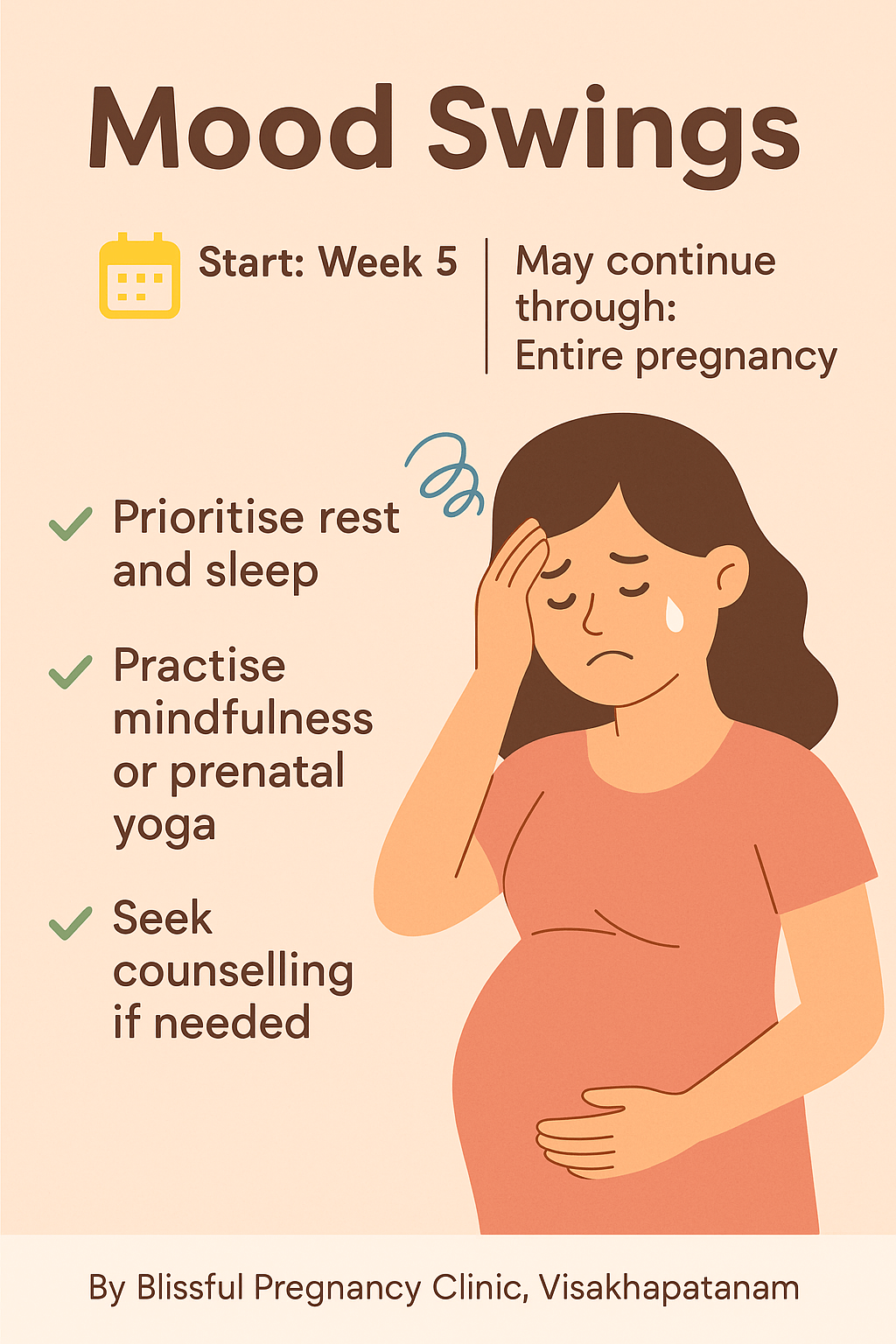
Mood Swings
Mood swings are one of the earliest and most common emotional changes during pregnancy. One moment you might feel joyful, the next tearful or anxious—for no clear reason. These emotional shifts are largely due to the surge in pregnancy hormones like oestrogen and progesterone, which affect neurotransmitters in the brain responsible for regulating mood.
Why it happens:
Rising hormone levels (especially oestrogen)
Physical fatigue and morning sickness
Anxiety about pregnancy and lifestyle changes
Sleep disturbances
What you can do:
Prioritise rest and consistent sleep
Practise mindfulness or prenatal yoga
Talk openly with your partner or a support group
Seek counselling if mood changes become intense or persistent
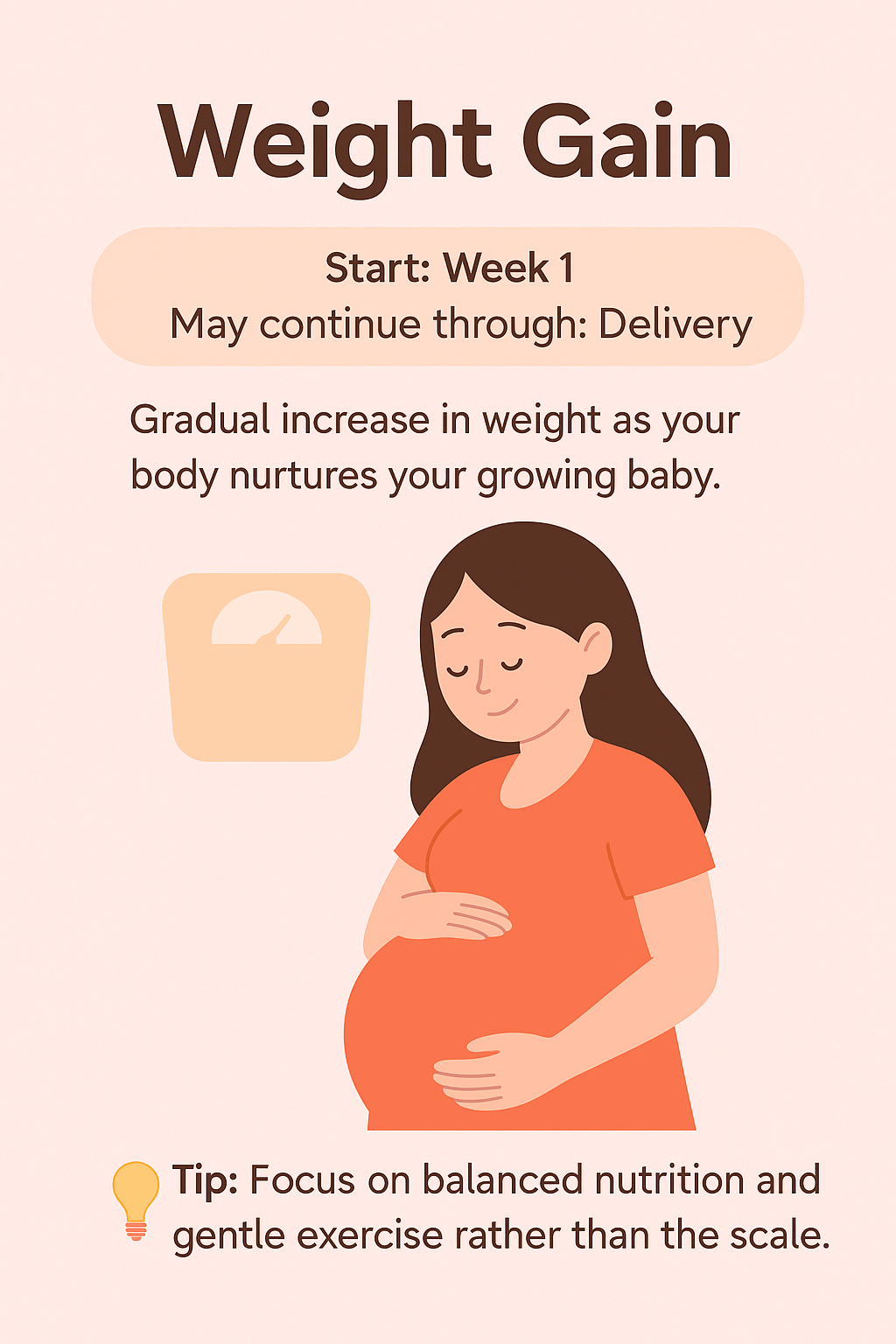
Weight Gain
Weight gain is a normal and essential part of pregnancy. It supports the development of the baby, the placenta, and increased blood volume. However, the emotional impact of seeing the numbers rise on the scale can be challenging for many women, especially when combined with fatigue and hormonal fluctuations.
Why it happens:
Growing uterus and baby
Increased blood and fluid volume
Fat stores preparing for breastfeeding
Hormonal changes affecting metabolism and appetite
What you can do:
Focus on balanced, nutrient-rich meals
Engage in pregnancy-safe physical activity like walking or prenatal yoga
Track your weight under guidance rather than obsessing over numbers
Speak to a dietician or nutritionist for a customised meal plan
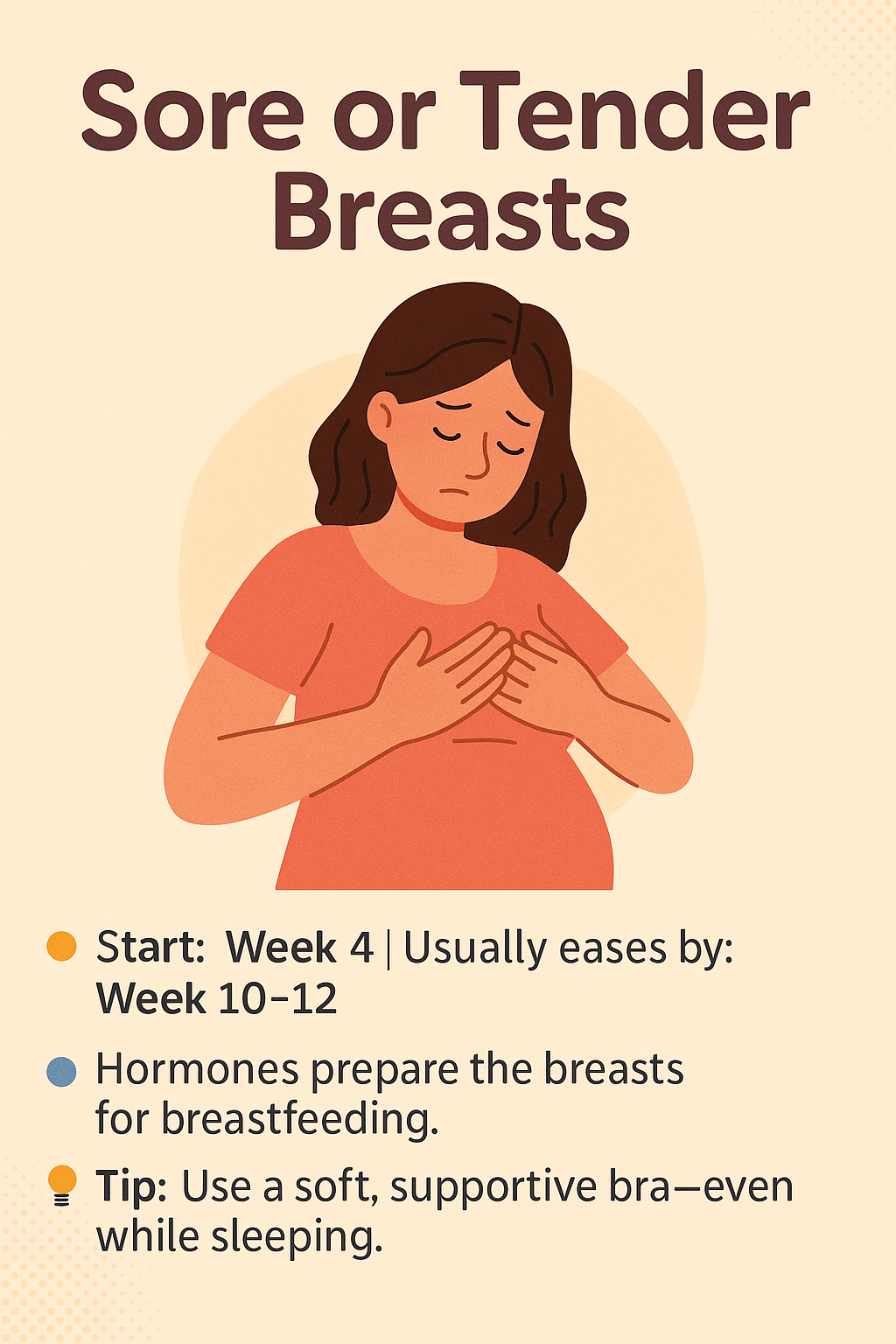
Sore or Tender Breasts
Breast tenderness is one of the earliest physical signs of pregnancy. Your breasts may feel swollen, heavy, tingly, or unusually sensitive to touch. This change happens as your body prepares the breasts and milk ducts for feeding your baby.
Why it happens:
Increased levels of oestrogen and progesterone
Improved blood flow to breast tissue
Growth of milk ducts in preparation for lactation
What you can do:
Wear a soft, well-fitted maternity bra
Use a sleep bra for overnight comfort
Avoid underwires if they cause pressure or irritation
Apply a warm compress if discomfort is significant
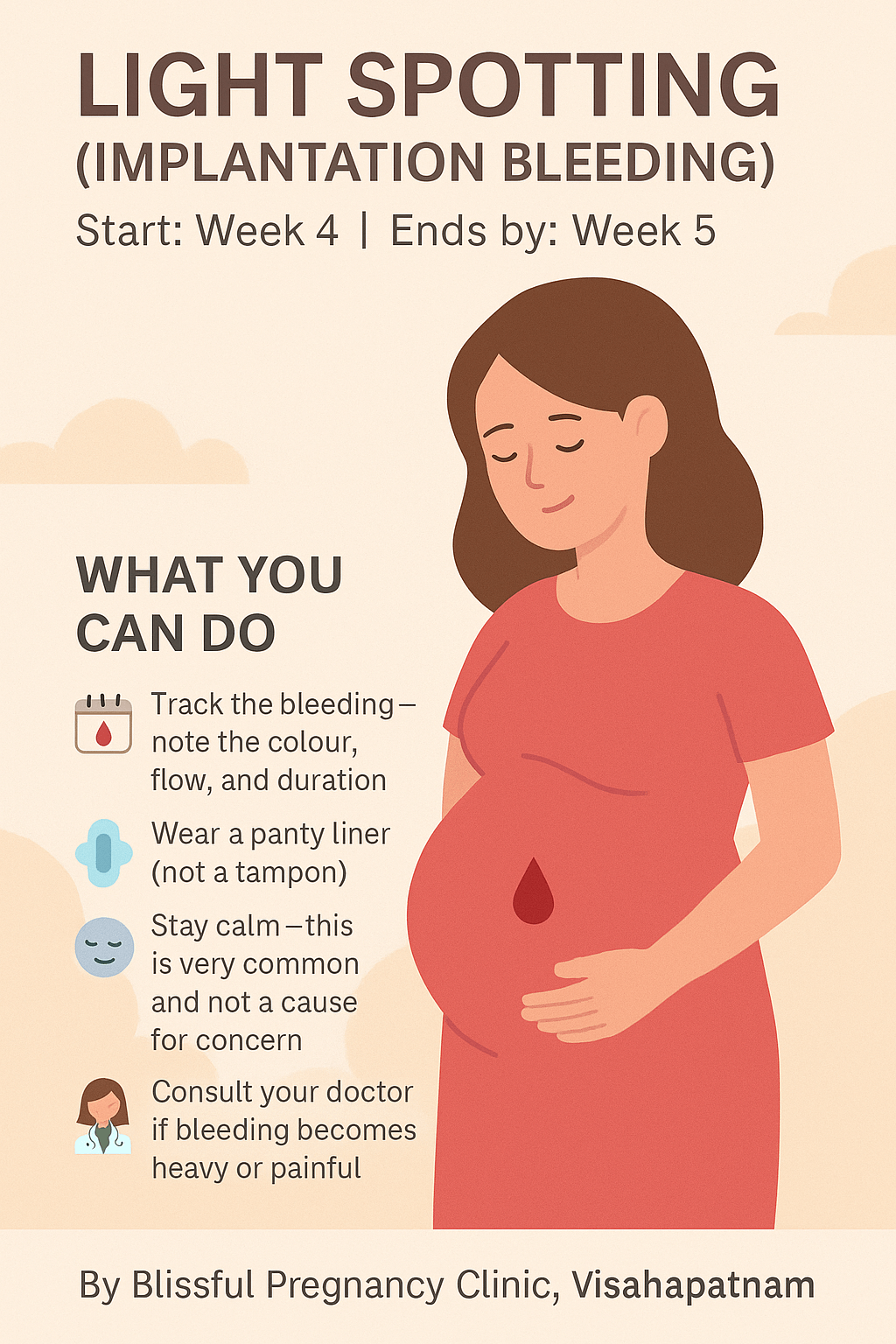
Light Spotting (Implantation Bleeding)
Light spotting is one of the earliest signs of pregnancy. It often occurs when the fertilised egg attaches itself to the lining of the uterus, usually around the time you would expect your period. The bleeding is typically pinkish or brown, lighter than a period, and doesn’t last more than a couple of days.
Why it happens:
Implantation of the embryo in the uterine wall
Hormonal changes affecting blood vessels
What you can do:
Track the bleeding—note the colour, flow, and duration
Wear a panty liner (not a tampon)
Stay calm—this is very common and not a cause for concern
Consult your doctor if bleeding becomes heavy or painful
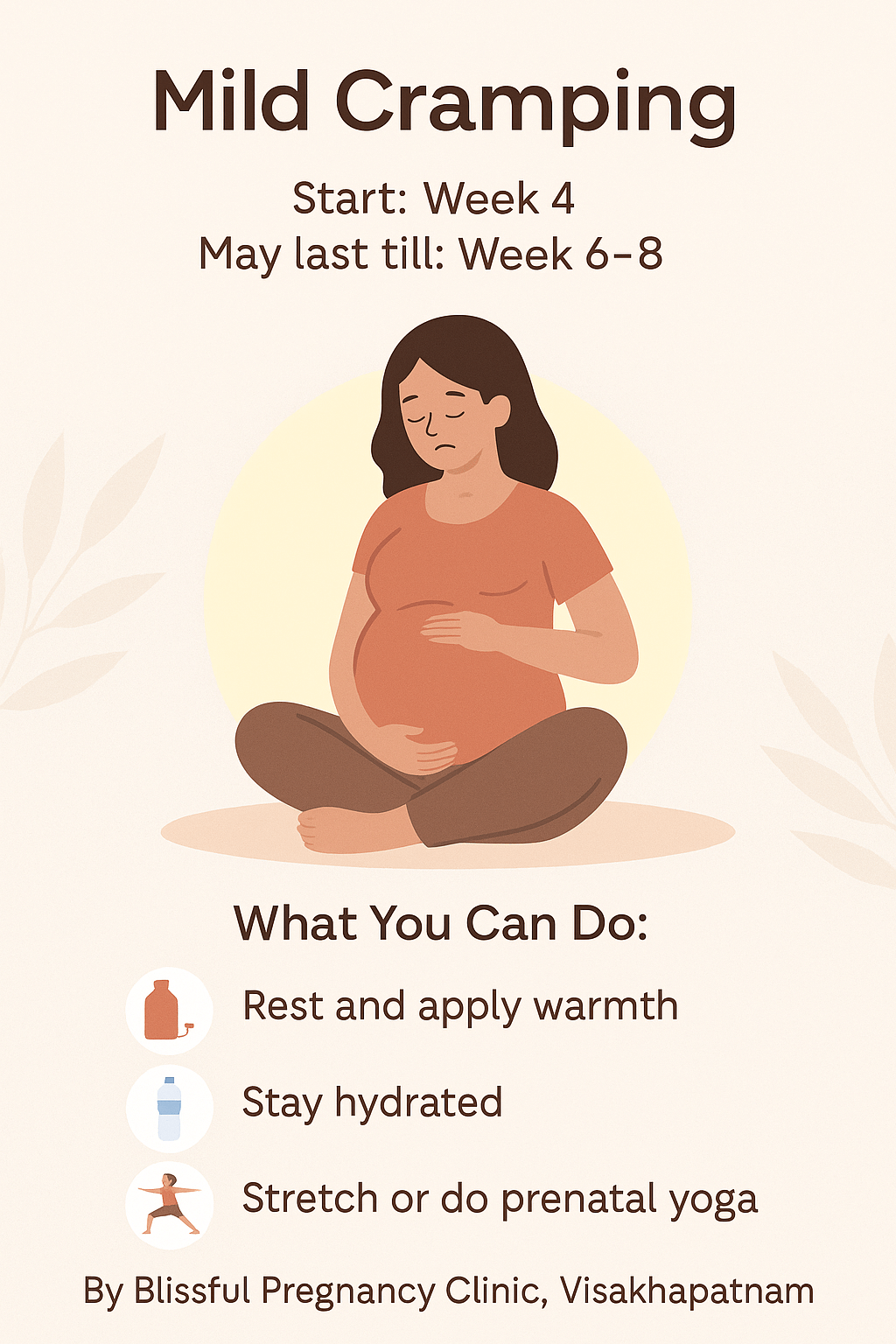
Mild Cramping
Mild cramping in early pregnancy can feel similar to period cramps. It’s usually harmless and related to the uterus beginning to stretch and make room for the growing embryo. Many women notice it around the time of implantation or shortly after a missed period.
Why it happens:
Implantation of the embryo in the uterus
Hormonal changes softening uterine muscles
Early uterine expansion
What you can do:
Rest and use a warm compress on the lower abdomen
Stay hydrated and avoid constipation
Stretch gently or practise prenatal yoga
See your doctor if cramping becomes severe or is accompanied by heavy bleeding
Local Tip – Blissful Pregnancy Clinic, Visakhapatnam: We regularly see women concerned about mild cramps. In most cases, it’s a normal sign of early pregnancy, but we’re always here to evaluate and reassure you when something doesn’t feel right.
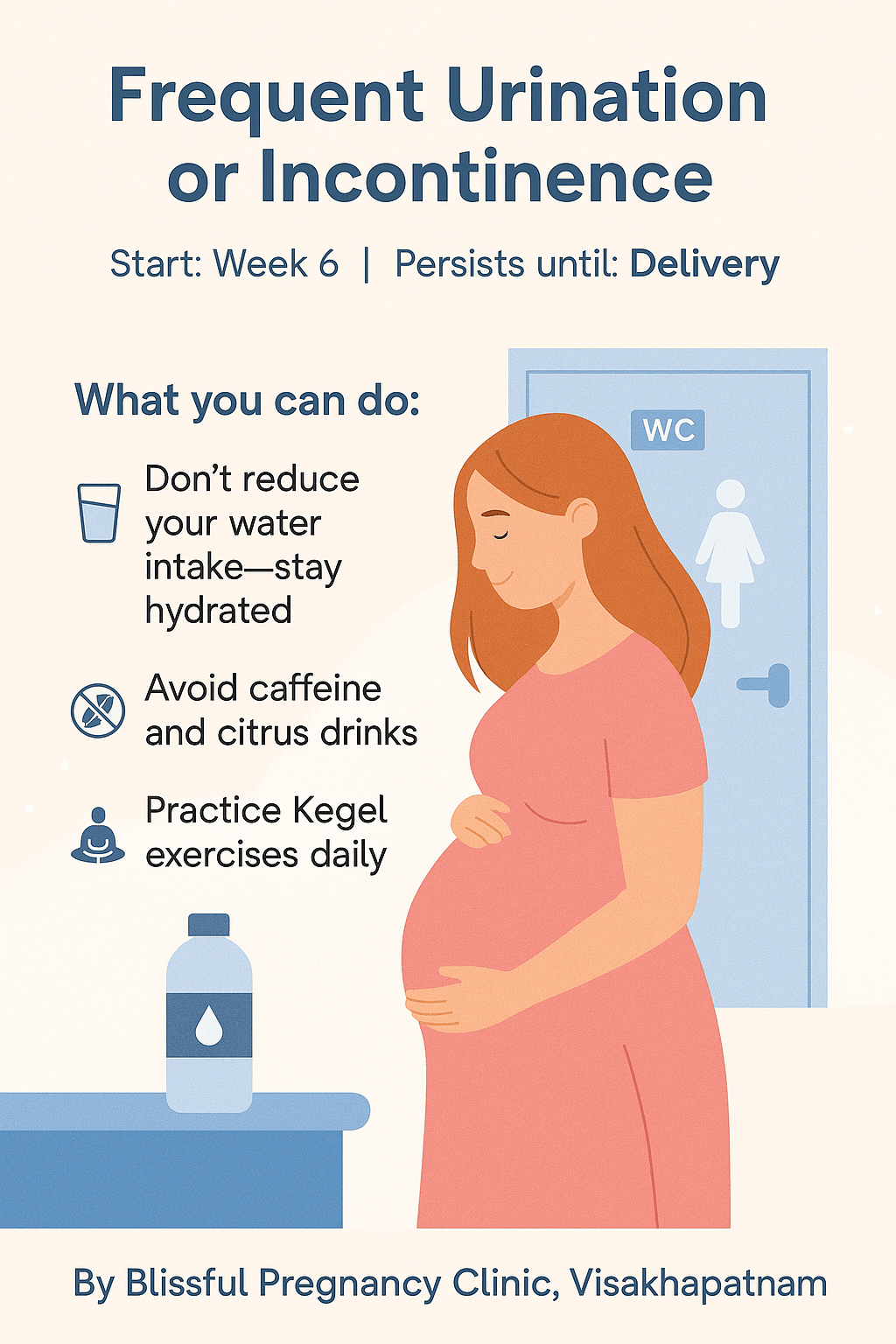
Frequent Urination or Incontinence
Needing to pee more often—or even experiencing mild leakage—is a common pregnancy symptom. It occurs early due to hormonal changes and continues as your uterus grows and places pressure on your bladder. Some women may also feel a sudden urge to urinate even if the bladder isn’t full.
Why it happens:
Increased blood flow to the pelvic area and kidneys
Growing uterus pressing on the bladder
Weakened pelvic floor muscles
What you can do:
Don’t reduce your water intake—stay hydrated
Avoid caffeine and citrus drinks which can irritate the bladder
Empty your bladder fully when you go
Practise Kegel exercises to strengthen pelvic muscles
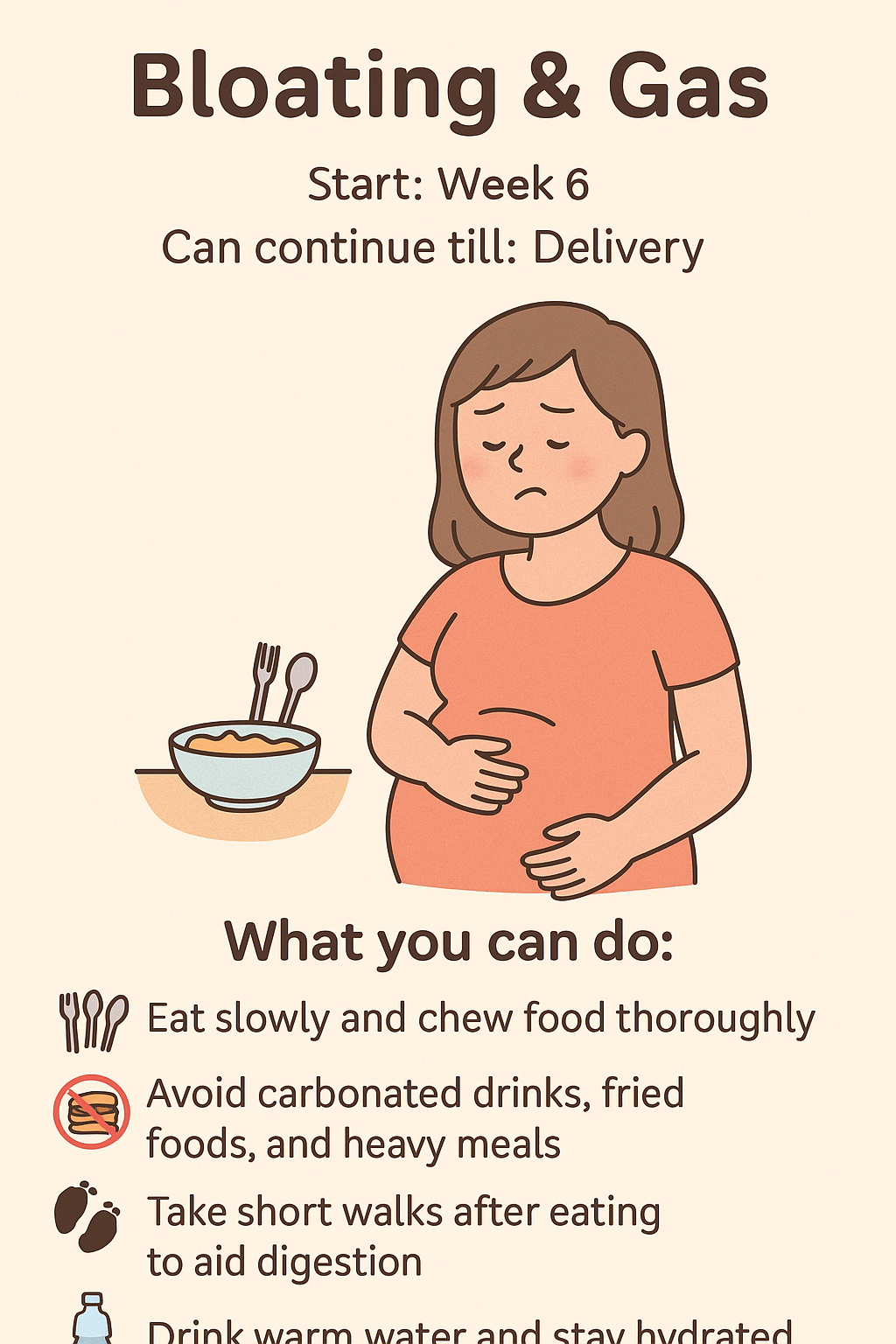
Bloating & Gas
A feeling of abdominal fullness, pressure, or trapped gas is quite common in pregnancy. Many women describe it as an early sign even before a missed period. It can make your belly feel tight, especially after meals, and may worsen as pregnancy progresses.
Why it happens:
Progesterone relaxes digestive tract muscles
Slower digestion causes gas build-up
Uterus expanding and pushing against the intestines
What you can do:
Eat slowly and chew food thoroughly
Avoid carbonated drinks, fried foods, and heavy meals
Take short walks after eating to aid digestion
Drink warm water and stay hydrated
Constipation
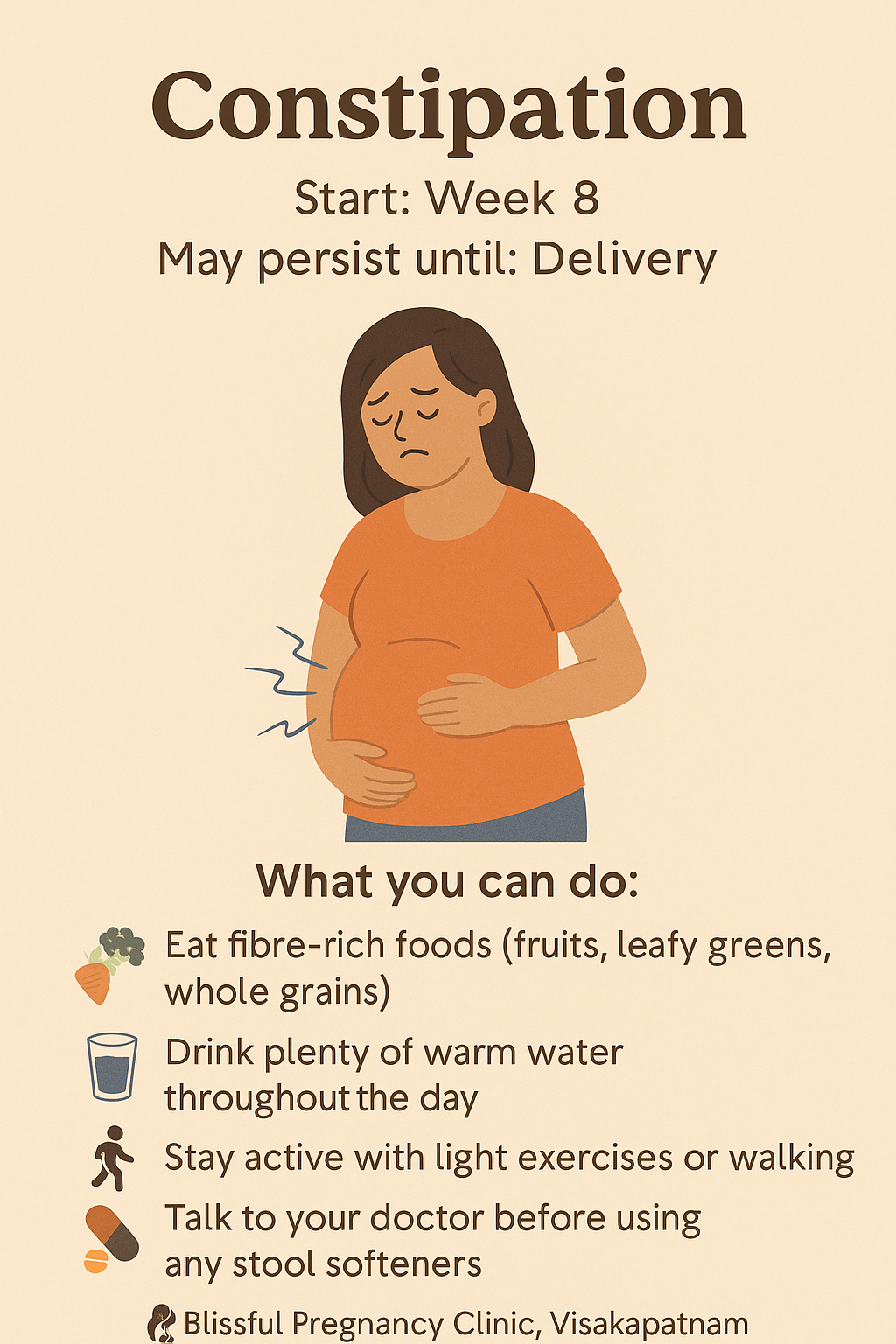
Constipation is a very common and uncomfortable pregnancy symptom. It means having fewer than three bowel movements a week, difficulty passing stools, or a feeling of incomplete evacuation. It’s usually due to hormonal changes that slow down digestion.
Why it happens:
Progesterone relaxes intestinal muscles, slowing bowel movement
Talk to your doctor before using any stool softeners
Nausea (Morning Sickness)
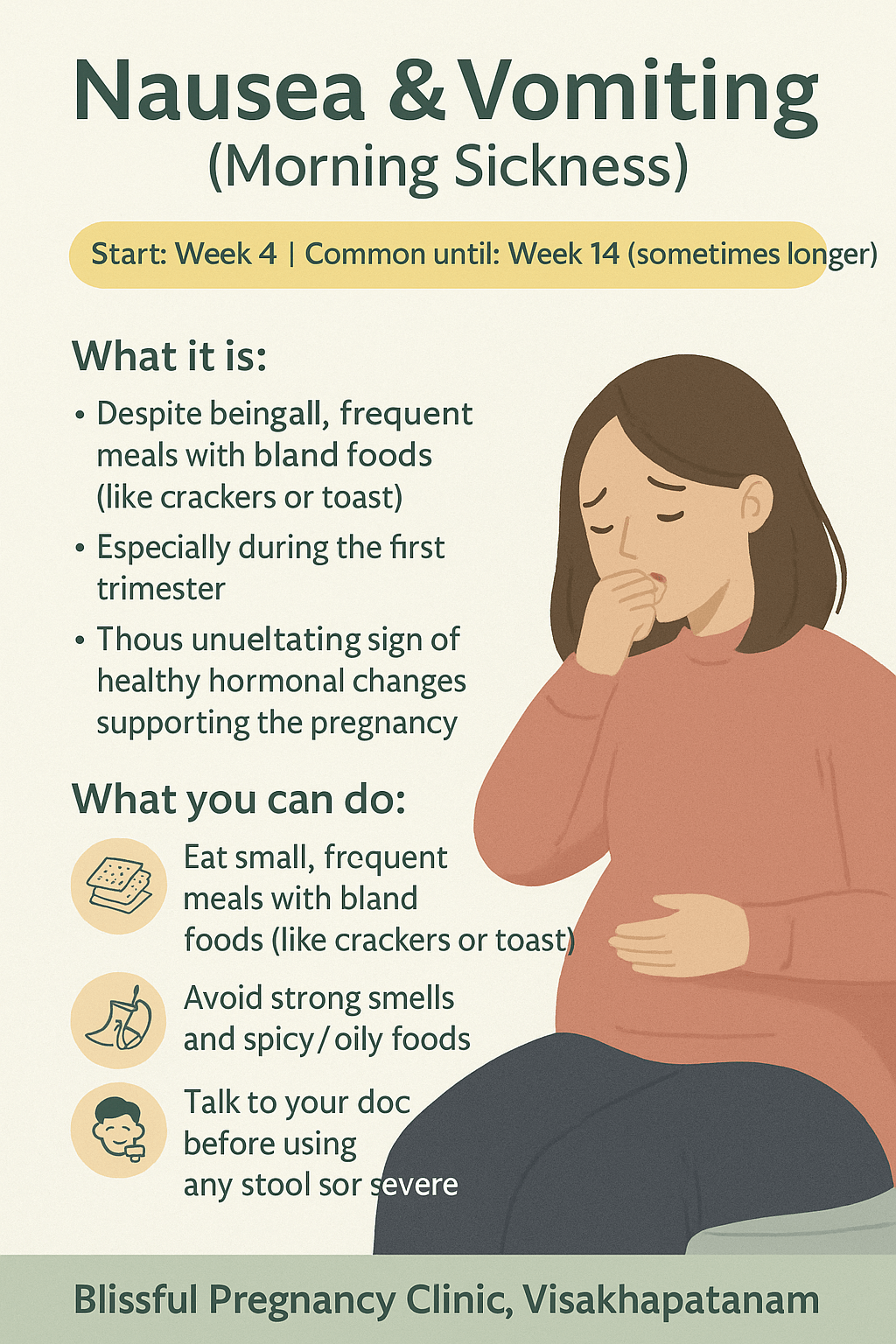
Despite being called “morning sickness,” nausea and vomiting can strike at any time of the day. It affects around 70% of pregnant women, especially during the first trimester. Though unpleasant, it’s usually a sign of healthy hormonal changes supporting the pregnancy.
Why it happens:
Increased levels of hCG (human chorionic gonadotropin)
Heightened sense of smell and food aversions
Digestive sensitivity during hormonal adjustment
What you can do:
Eat small, frequent meals with bland foods (like crackers or toast)
Keep ginger tea or lemon water handy
Avoid strong smells and spicy/oily foods
Talk to your doctor if vomiting is frequent or severe
Heartburn & Indigestion
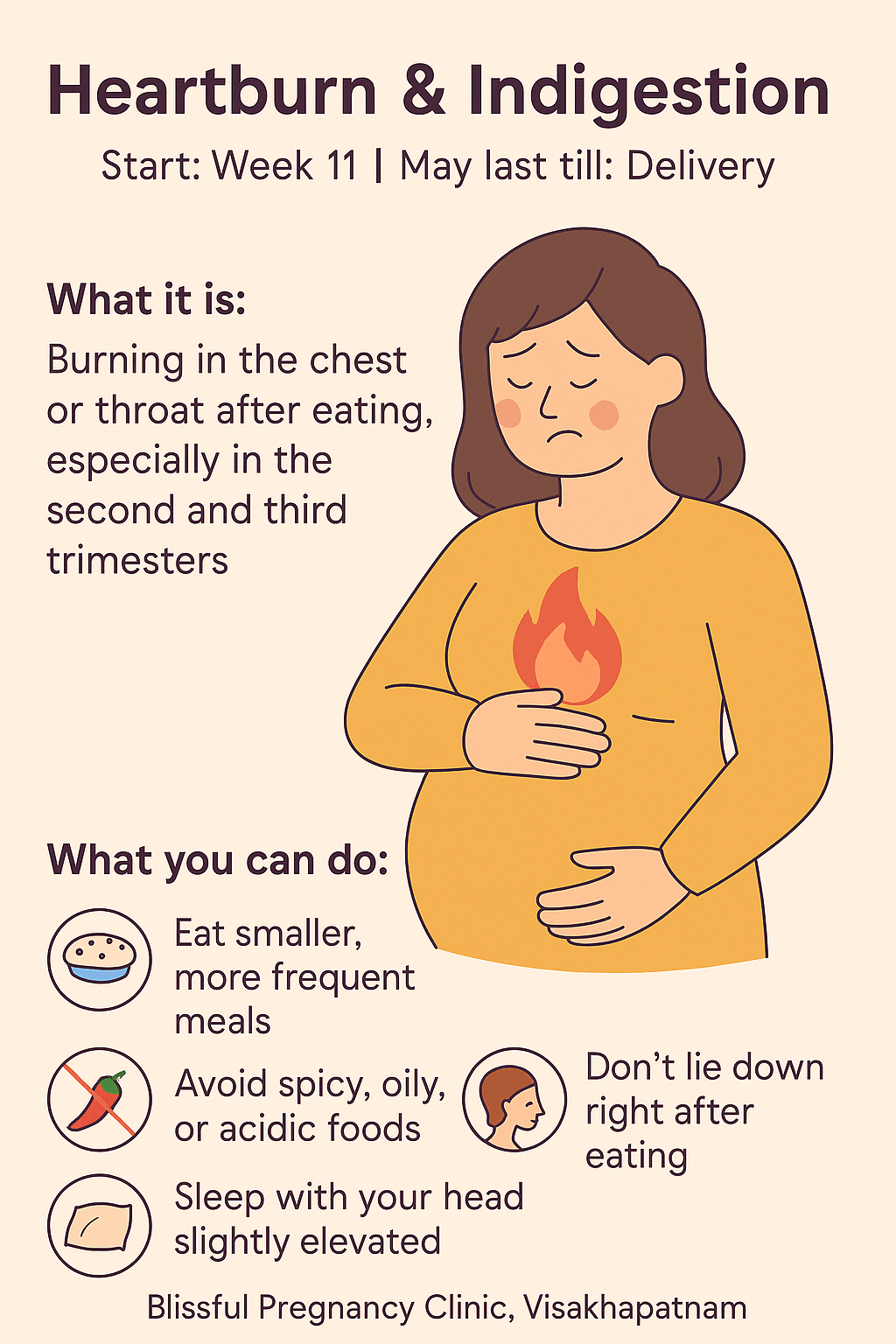
Heartburn is a burning feeling in the chest or throat after eating, and indigestion often follows meals with bloating or discomfort. Both are common during pregnancy, especially in the second and third trimesters, as your body adapts to accommodate the growing baby.
Why it happens:
Hormones relax the valve between the stomach and oesophagus
The expanding uterus presses against the stomach
Slower digestion due to hormonal changes
What you can do:
Eat smaller, more frequent meals
Avoid spicy, oily, or acidic foods
Don’t lie down right after eating
Sleep with your head slightly elevated
Food Aversions or Cravings
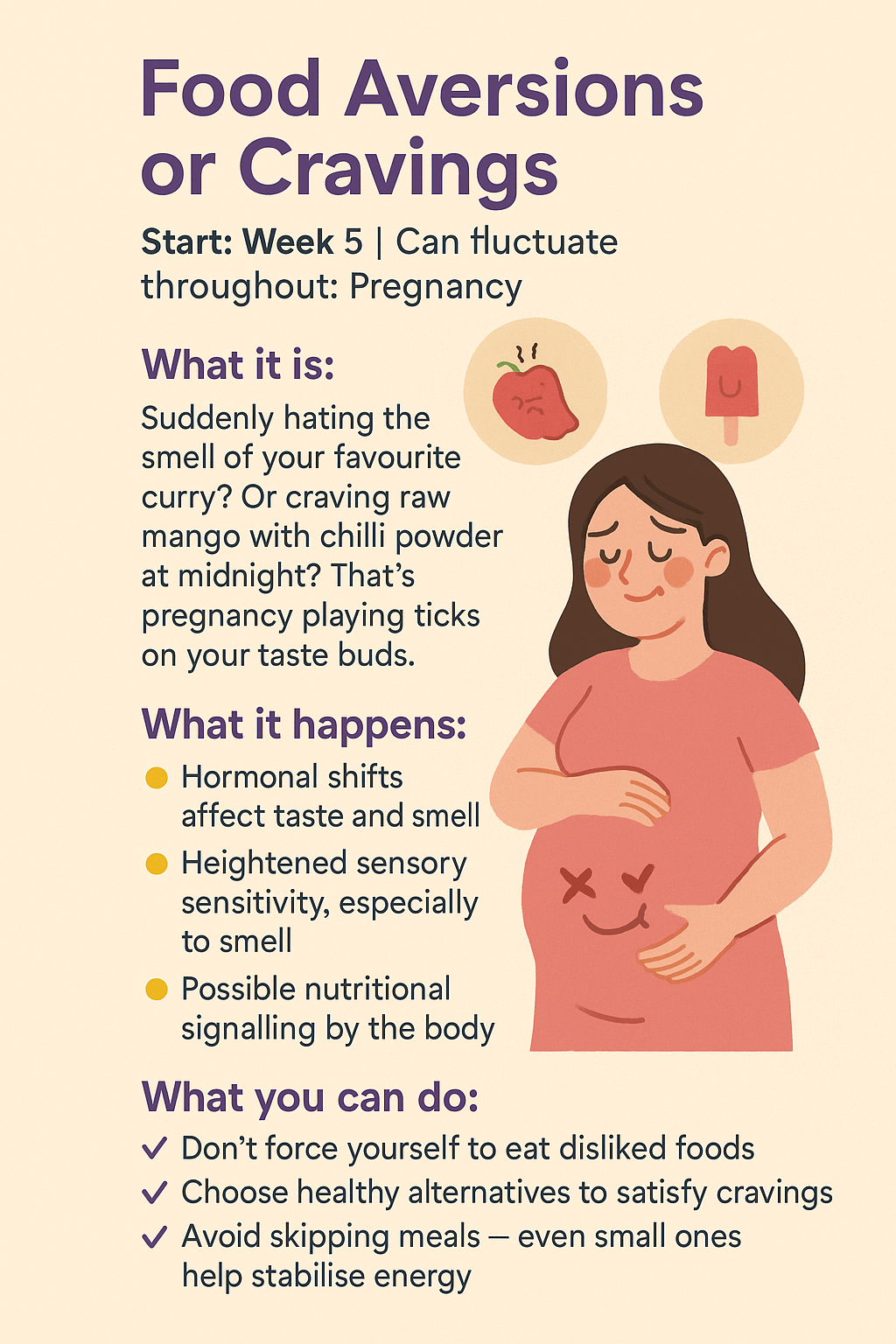
Suddenly hating the smell of your favourite curry? Or craving raw mango with chilli powder at midnight? That’s pregnancy playing tricks on your taste buds. Food aversions and cravings are incredibly common and vary widely from person to person.
Why it happens:
Hormonal shifts affect taste and smell
Heightened sensory sensitivity, especially to smell
Possible nutritional signalling by the body
What you can do:
Don’t force yourself to eat disliked foods
Choose healthy alternatives to satisfy cravings
Avoid skipping meals—even small ones help stabilise energy
If cravings are unusual (like ice, chalk, etc.), consult your doctor
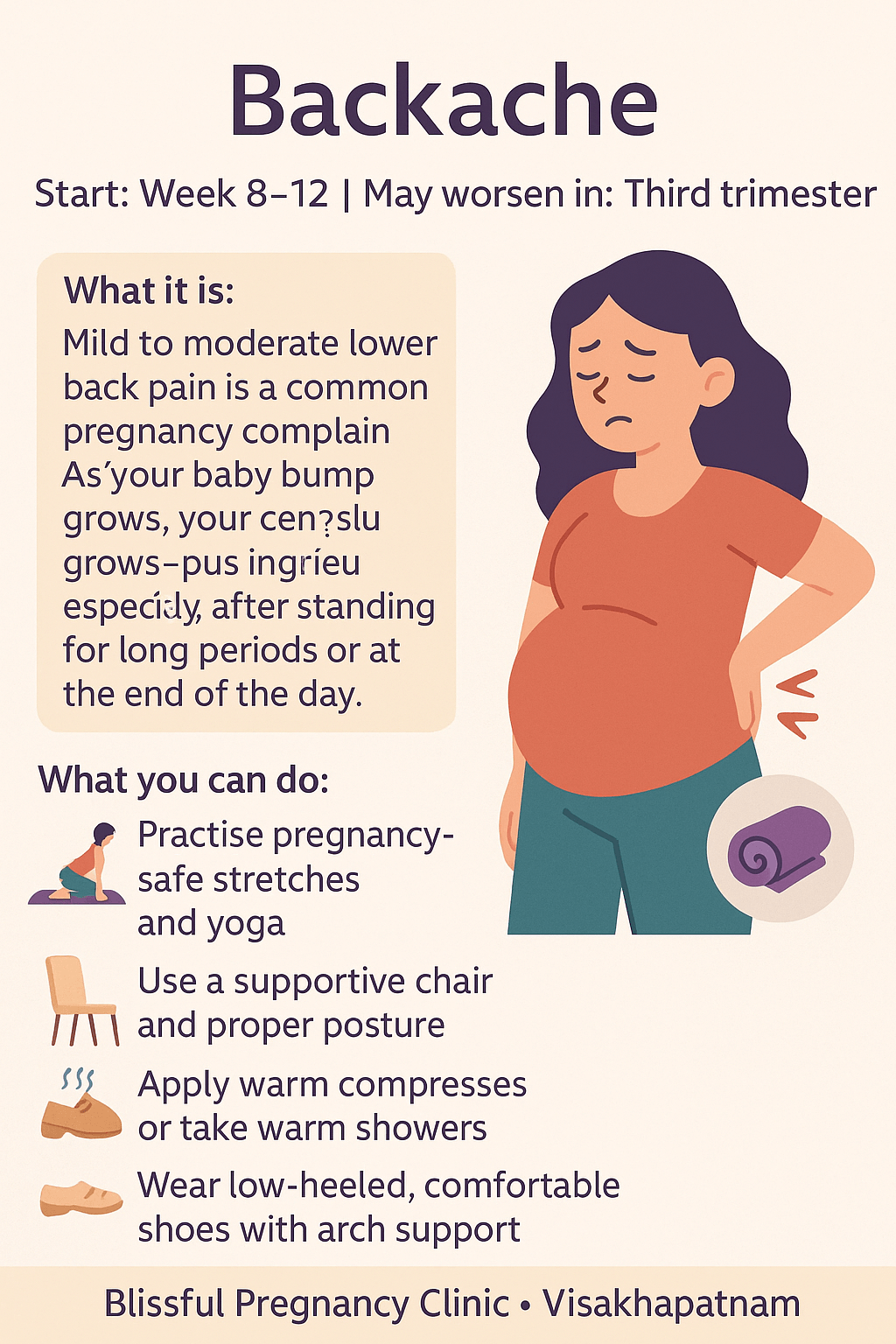
Backache
Mild to moderate lower back pain is a common pregnancy complaint. As your baby bump grows, your centre of gravity shifts and ligaments loosen, putting strain on your lower spine. It’s usually worse after standing for long periods or at the end of the day.
Why it happens:
Loosening of joints and ligaments due to relaxin hormone
Postural strain from growing belly
Weakened core and back muscles
What you can do:
Practise pregnancy-safe stretches and yoga
Use a supportive chair and proper posture
Apply warm compresses or take warm showers
Wear low-heeled, comfortable shoes with arch support
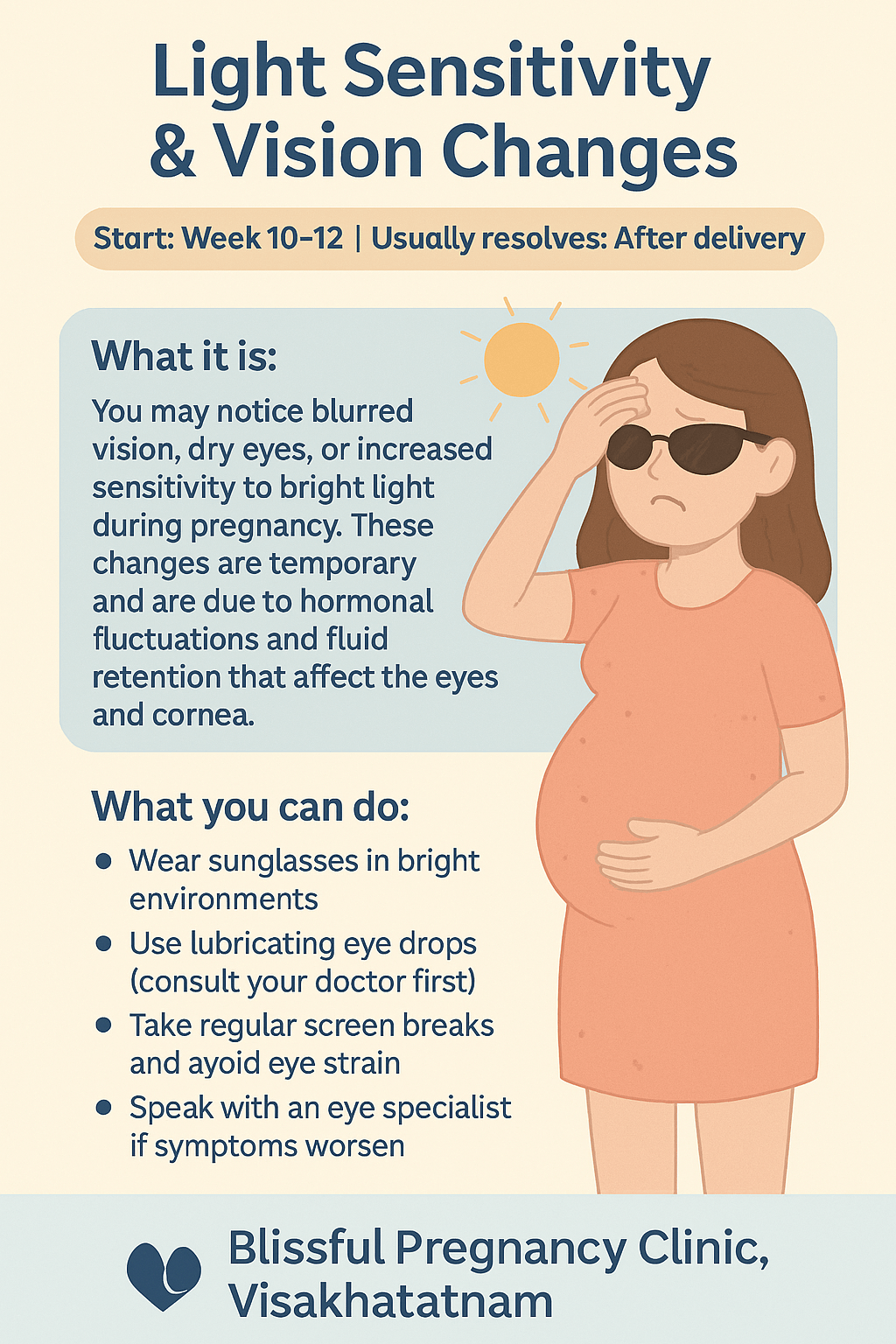
Light Sensitivity & Vision Changes
You may notice blurred vision, dry eyes, or increased sensitivity to bright light during pregnancy. These changes are temporary and are due to hormonal fluctuations and fluid retention that affect the eyes and cornea.
Why it happens:
Hormones change tear production, leading to dryness
Increased fluid retention alters eye shape and focus
Changes in blood flow may affect eye pressure
What you can do:
Wear sunglasses in bright environments
Use lubricating eye drops (consult your doctor first)
Take regular screen breaks and avoid eye strain
Speak with an eye specialist if symptoms worsen
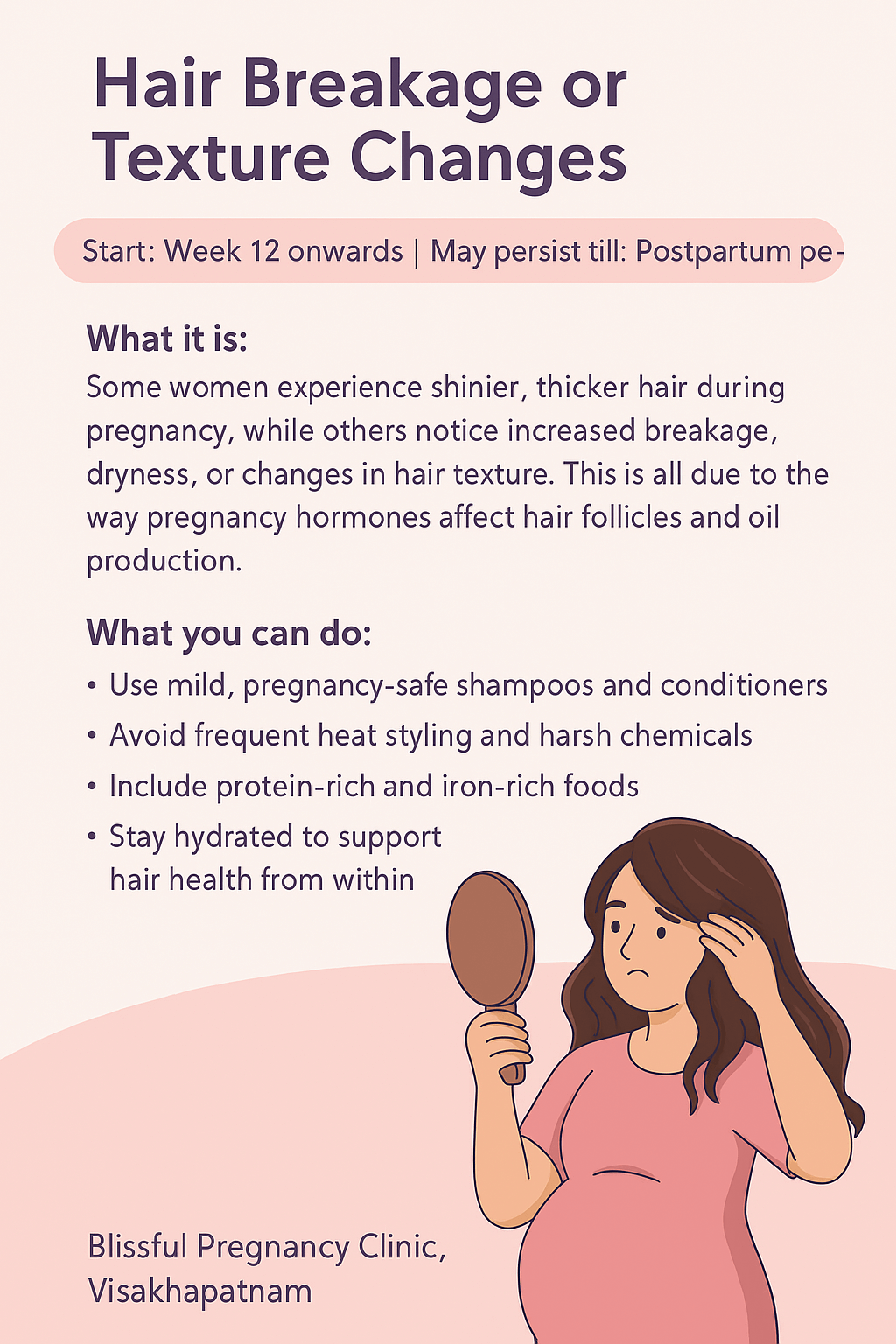
Hair Breakage or Texture Changes
Some women experience shinier, thicker hair during pregnancy, while others notice increased breakage, dryness, or changes in hair texture. This is all due to the way pregnancy hormones affect hair follicles and oil production.
Why it happens:
Fluctuations in oestrogen levels affect hair growth cycles
Increased dryness weakens hair strands
Changes in oil production can alter hair texture
What you can do:
Use mild, pregnancy-safe shampoos and conditioners
Avoid frequent heat styling and harsh chemicals
Include protein-rich and iron-rich foods in your diet
Stay hydrated to support hair health from within
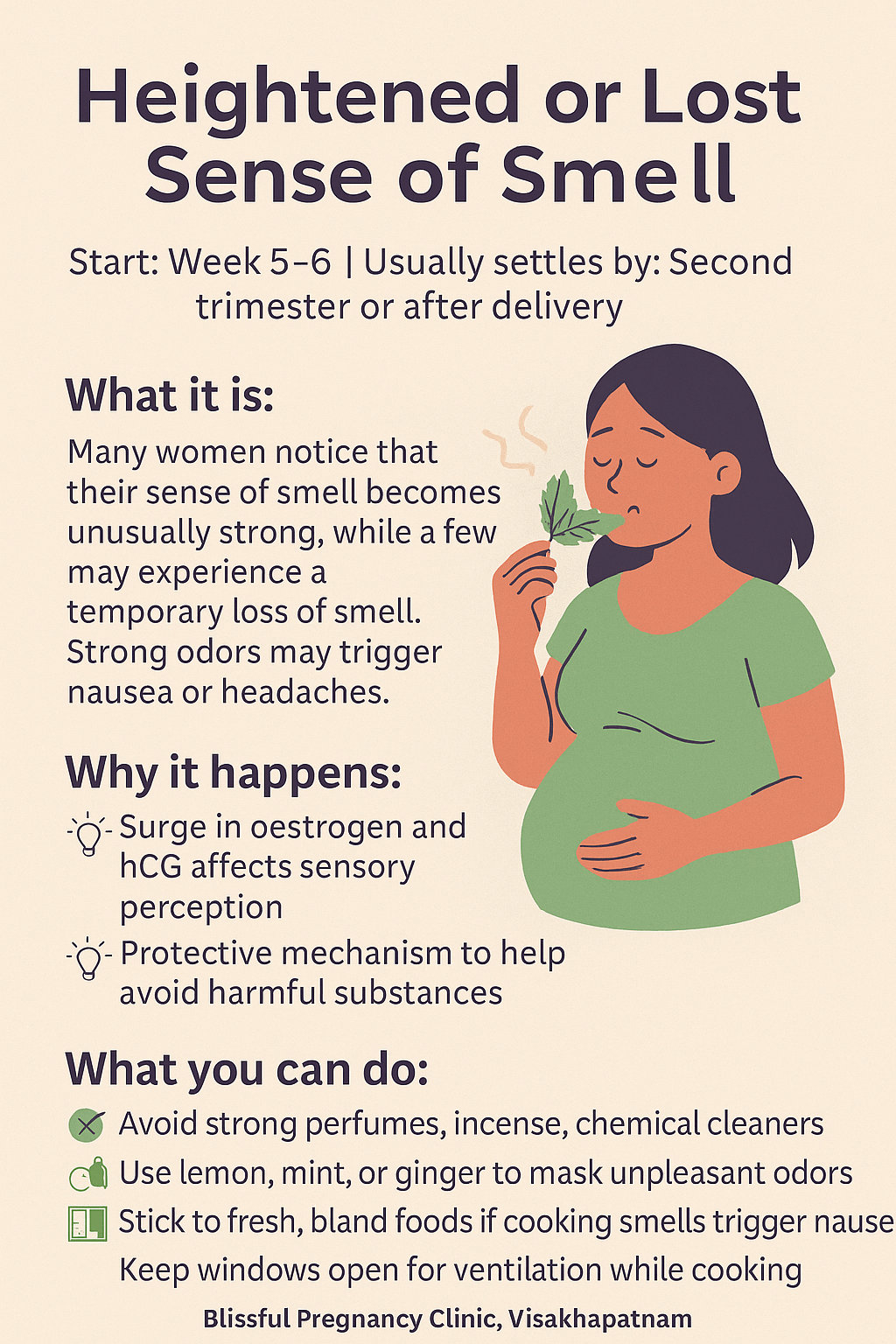
Heightened or Lost Sense of Smell
Many women notice that their sense of smell becomes unusually strong (hyperosmia), while a few may experience a temporary loss of smell (anosmia). Strong odours may trigger nausea or headaches during early pregnancy, even from everyday items like perfumes, cooking, or detergents.
Why it happens:
Surge in oestrogen and hCG affects sensory perception
Protective mechanism to help avoid harmful substances
What you can do:
Avoid strong perfumes, incense, and chemical cleaners
Stick to fresh, bland foods if cooking smells trigger nausea
Use lemon, mint, or ginger to mask unpleasant odours
Keep windows open for ventilation while cooking
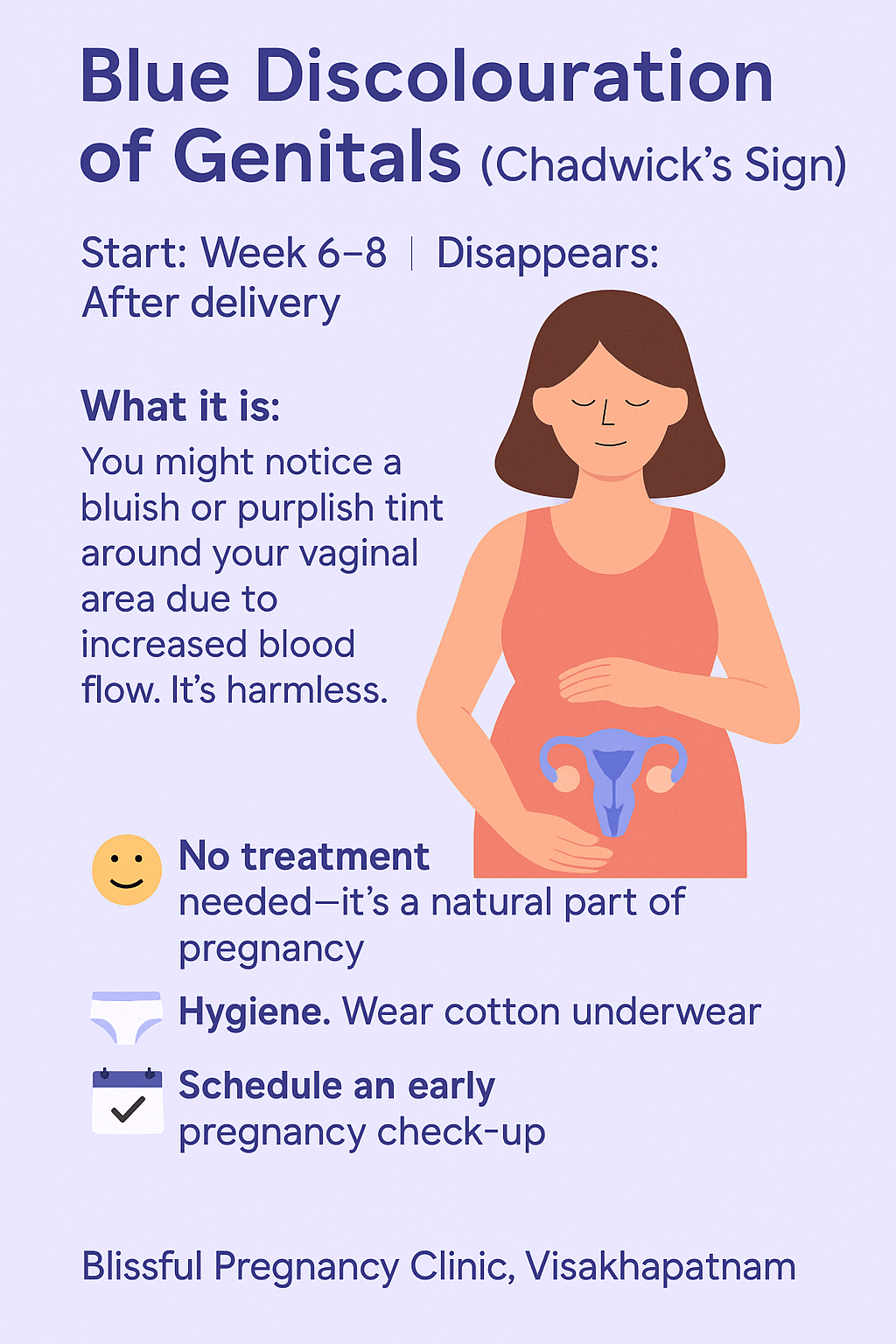
Blue Discolouration of Genitals
You might notice a bluish or purplish tint around your vaginal area. This early pregnancy sign, known as Chadwick’s sign, occurs due to increased blood flow and vascular congestion in the pelvic region. It’s harmless and not something to worry about.
Why it happens:
Increased blood supply to the cervix and vaginal tissues
Hormonal changes causing vascular engorgement
What you can do:
No treatment needed—it’s a natural part of pregnancy
Maintain good hygiene and wear breathable cotton underwear
Schedule an early pregnancy check-up to confirm progress
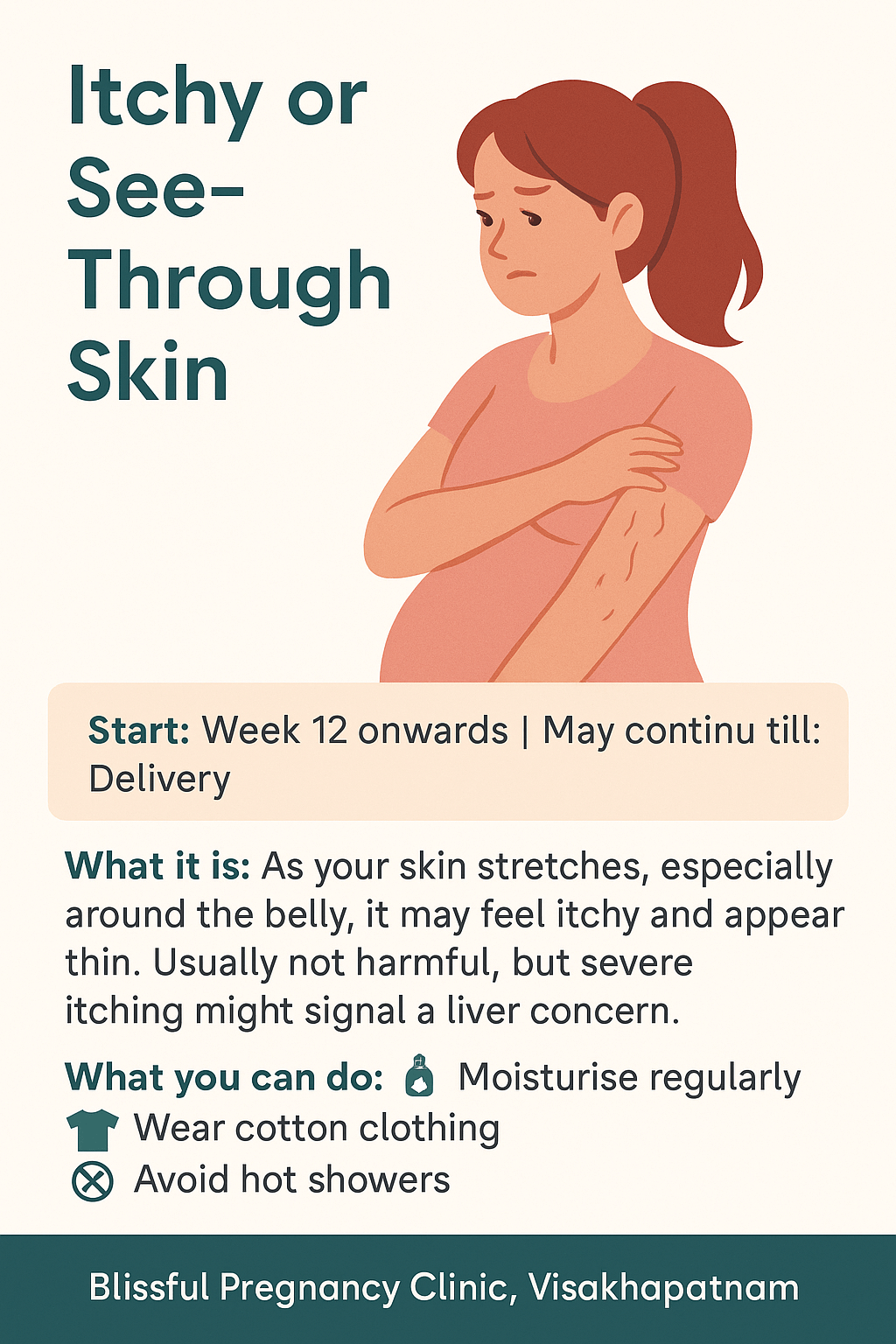
Itchy or See-Through Skin
As your skin stretches—especially around the belly, breasts, and thighs—it may feel itchy, dry, or appear thin and almost translucent. While this is usually harmless, intense itching can signal rare conditions like obstetric cholestasis that require medical attention.
Why it happens:
Stretching of skin tissues as the body grows
Hormonal changes affecting skin hydration
Increased blood circulation makes skin more sensitive
What you can do:
Moisturise daily with fragrance-free creams or natural oils
Wear soft, breathable cotton clothing
Avoid hot showers which worsen dryness
Consult your doctor if you have severe or persistent itching
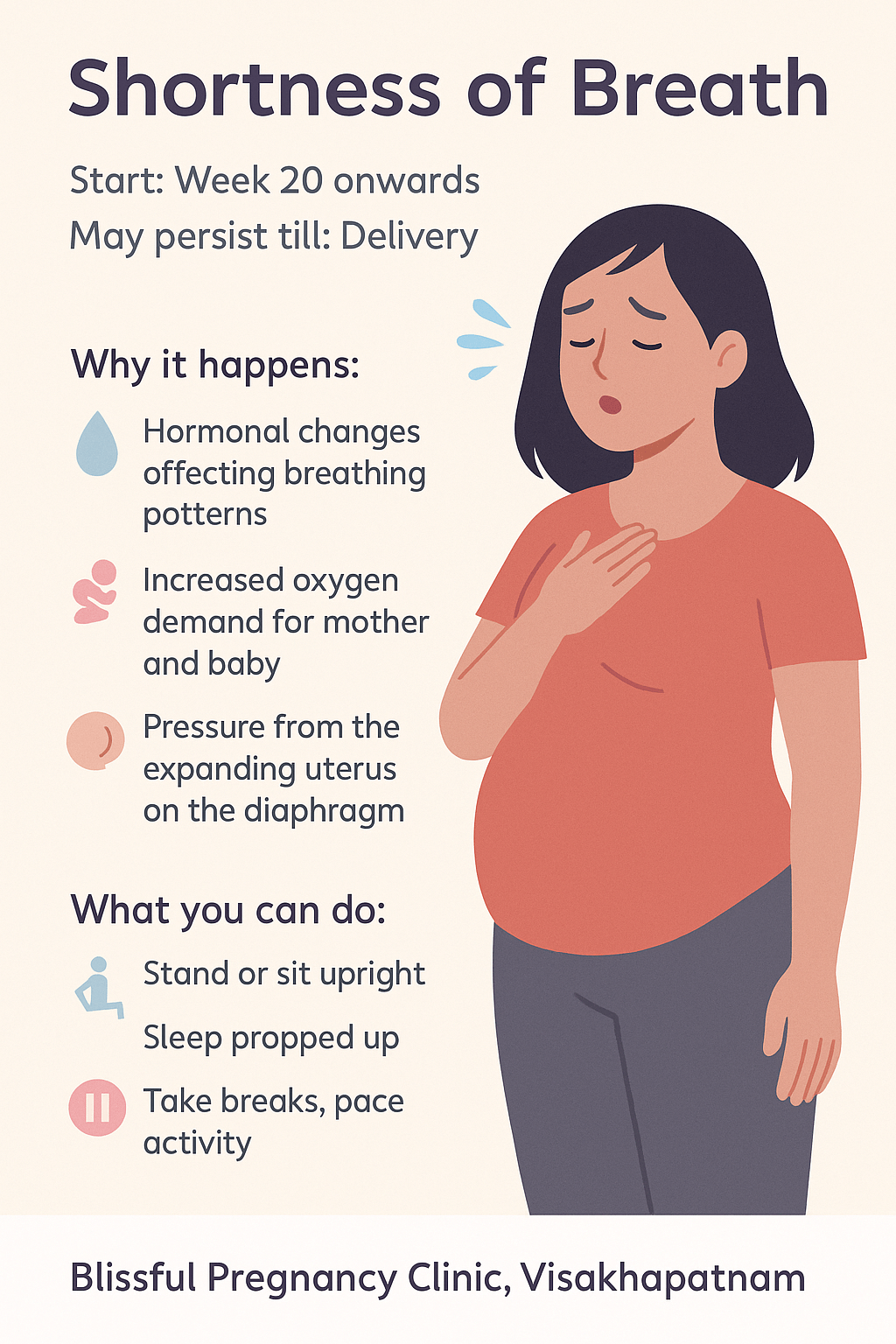
Shortness of Breath
Many pregnant women experience breathlessness, especially during physical activity, climbing stairs, or even when lying flat. This happens as your body adjusts to increased oxygen demands and as the growing uterus pushes against your diaphragm.
Why it happens:
Hormonal changes affecting breathing patterns
Increased oxygen demand for mother and baby
Pressure from the expanding uterus on the diaphragm
What you can do:
Stand or sit upright to give your lungs more space
Sleep propped up with extra pillows
Take breaks and pace yourself during activities
Report sudden or severe breathlessness to your doctor
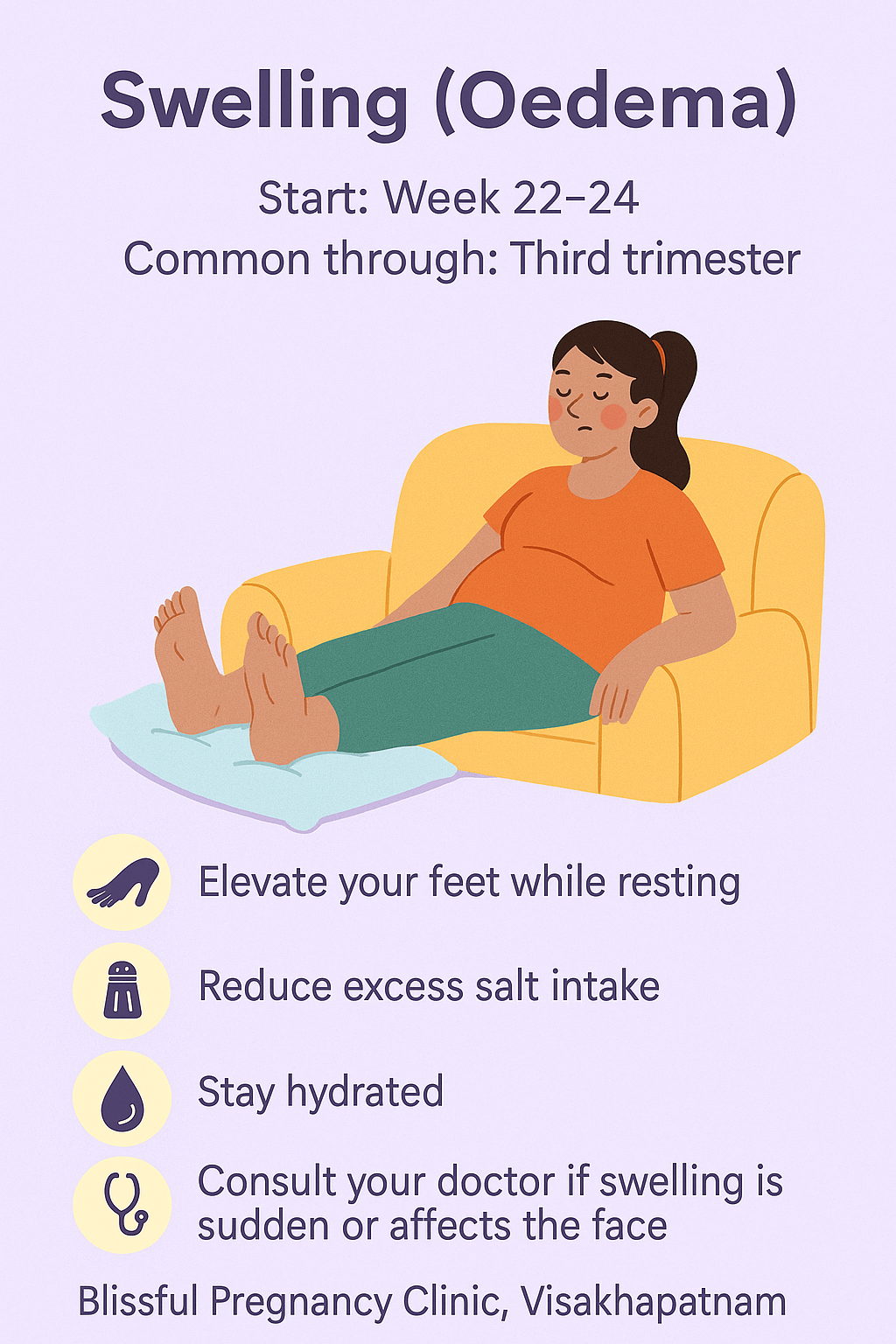
Swelling (Oedema)
Mild swelling in the feet, ankles, legs, and even hands is a typical part of pregnancy. It often worsens in the evening or after standing for long hours. Though usually harmless, sudden or severe swelling should be assessed to rule out pre-eclampsia.
Why it happens:
Body retains more fluid during pregnancy
Pressure from the growing uterus slows blood flow in legs
Hormones affect blood vessel walls and fluid balance
What you can do:
Elevate your feet while resting
Wear comfortable shoes and avoid standing for long periods
Stay hydrated and reduce excess salt intake
Consult your doctor if swelling is sudden or affects the face
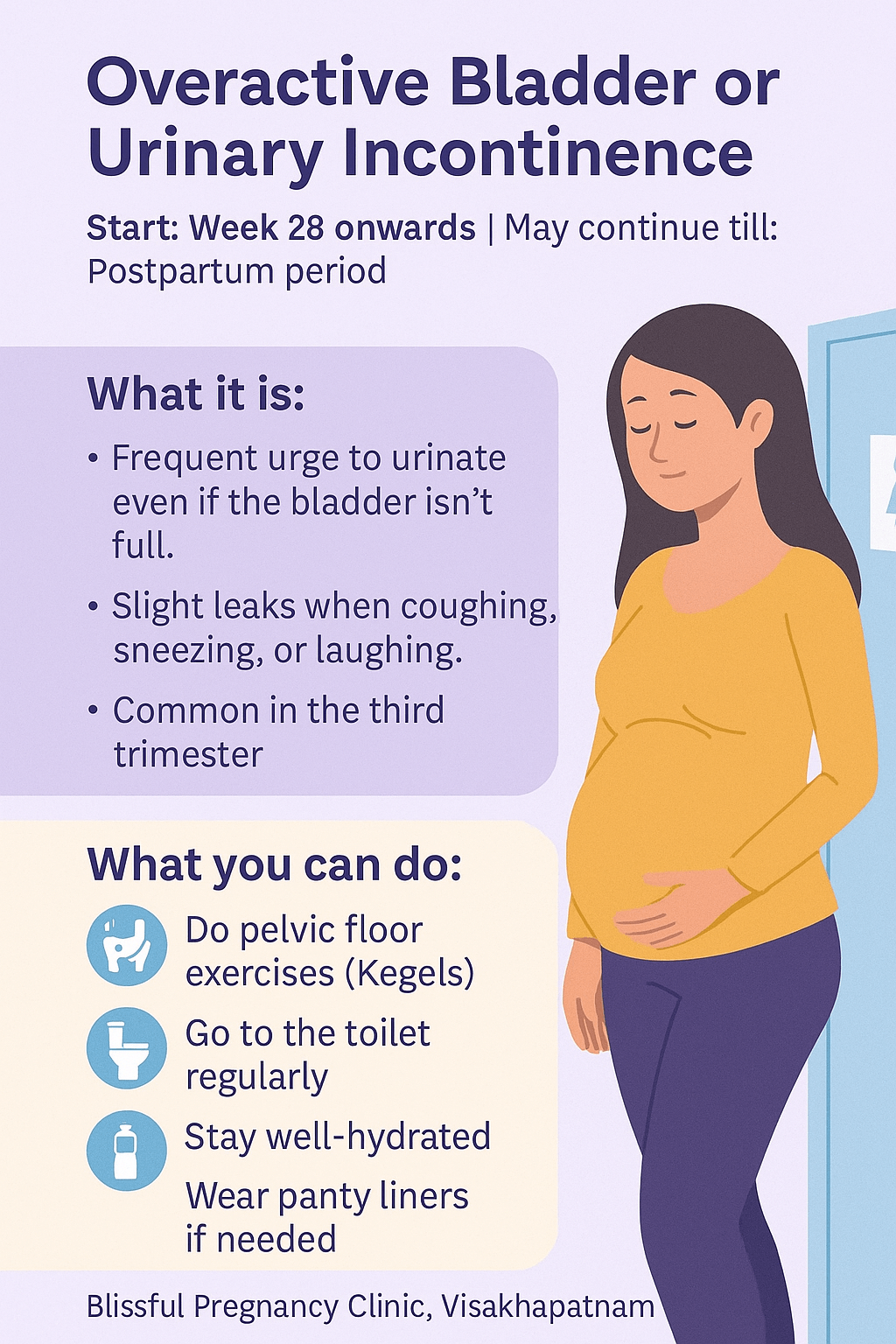
Urinary Incontinence
An overactive bladder refers to the frequent urge to urinate, even if the bladder isn’t full. Some women may also experience slight leaks while coughing, sneezing, or laughing—this is urinary incontinence, and it’s quite common in the third trimester.
Why it happens:
Growing uterus putting pressure on the bladder
Relaxed pelvic floor muscles due to pregnancy hormones
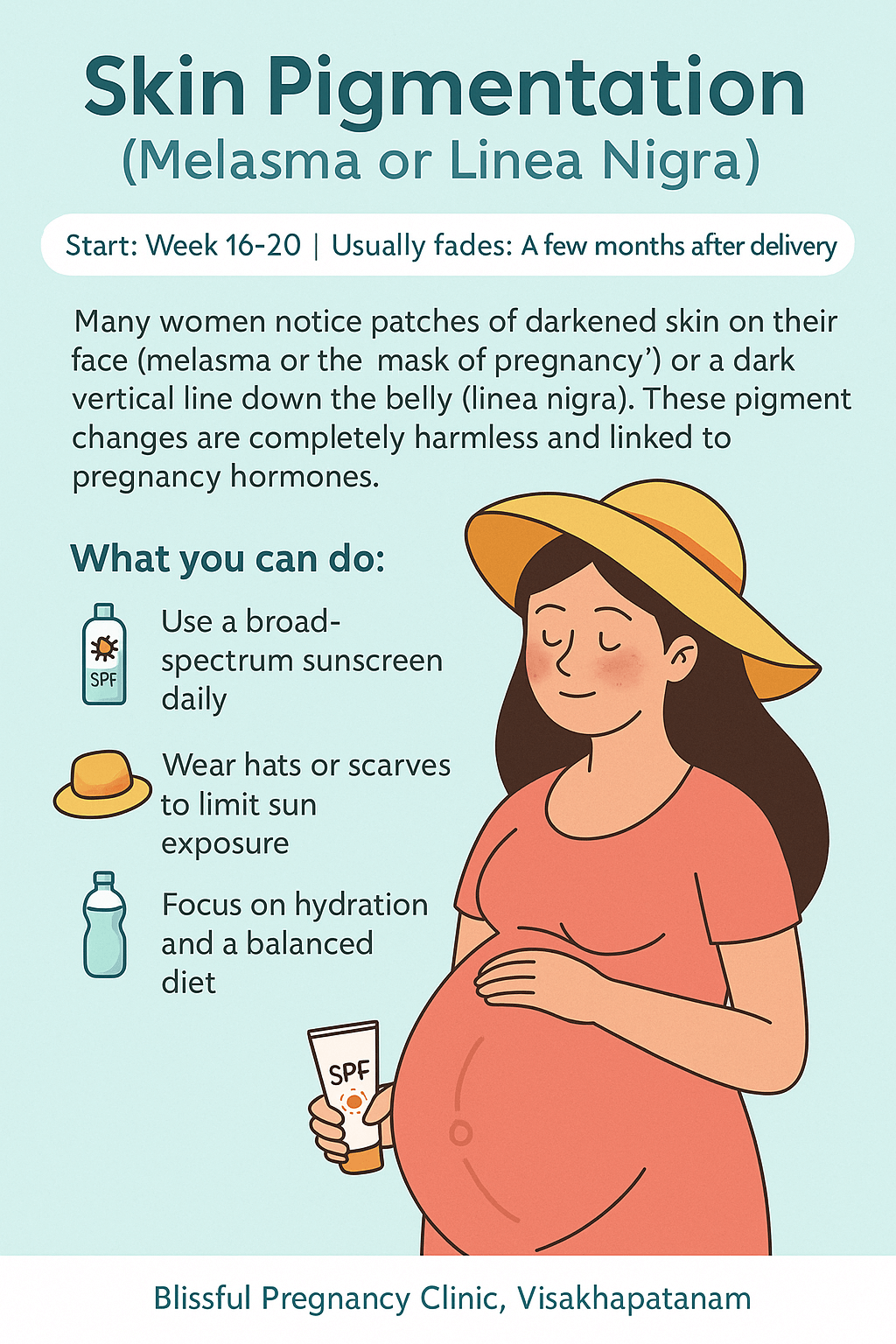
Many women notice patches of darkened skin on their face (melasma or the “mask of pregnancy”) or a dark vertical line down the belly (linea nigra). These pigment changes are completely harmless and linked to pregnancy hormones.
Why it happens:
Increased melanin production due to elevated oestrogen
Exposure to sunlight can darken pigmentation further
Genetic factors may influence how noticeable it is
What you can do:
Use a broad-spectrum sunscreen daily
Wear hats or scarves to limit sun exposure
Do not use skin lightening creams without doctor’s advice
Focus on hydration and a balanced diet rich in Vitamin C
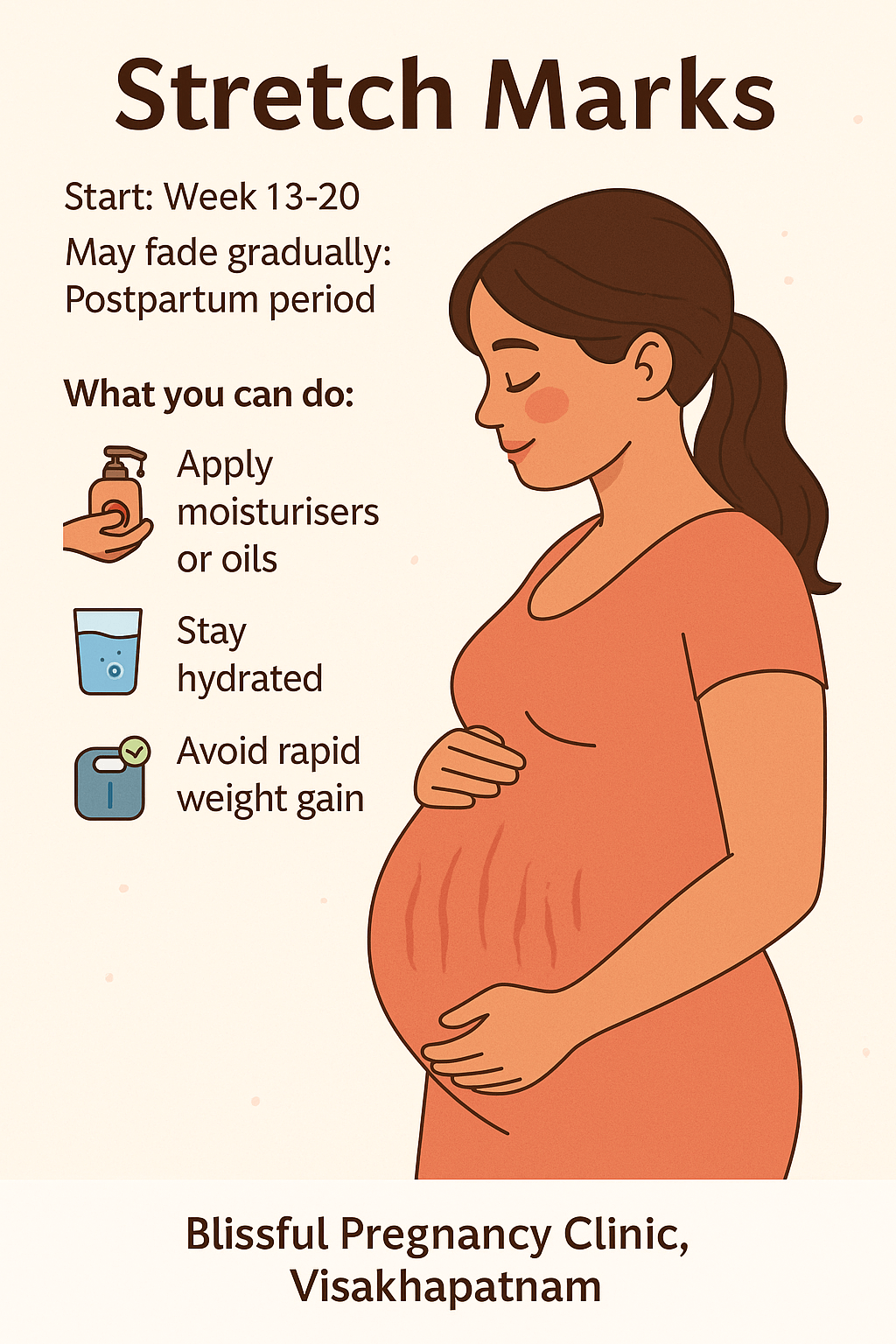
Stretch Marks
Stretch marks are streaks or lines that develop on the skin as it stretches quickly, especially over the abdomen, breasts, hips, and thighs. They may appear pink, red, purple, or silvery, and are completely normal in pregnancy.
Why it happens:
Rapid stretching of the skin and connective tissues
Genetics play a role—some women are more prone than others
Hormonal changes affect skin elasticity
What you can do:
Apply moisturisers or oils rich in Vitamin E and cocoa butter
Stay hydrated and maintain a nutrient-rich diet
Avoid rapid weight gain by following healthy pregnancy weight guidelines
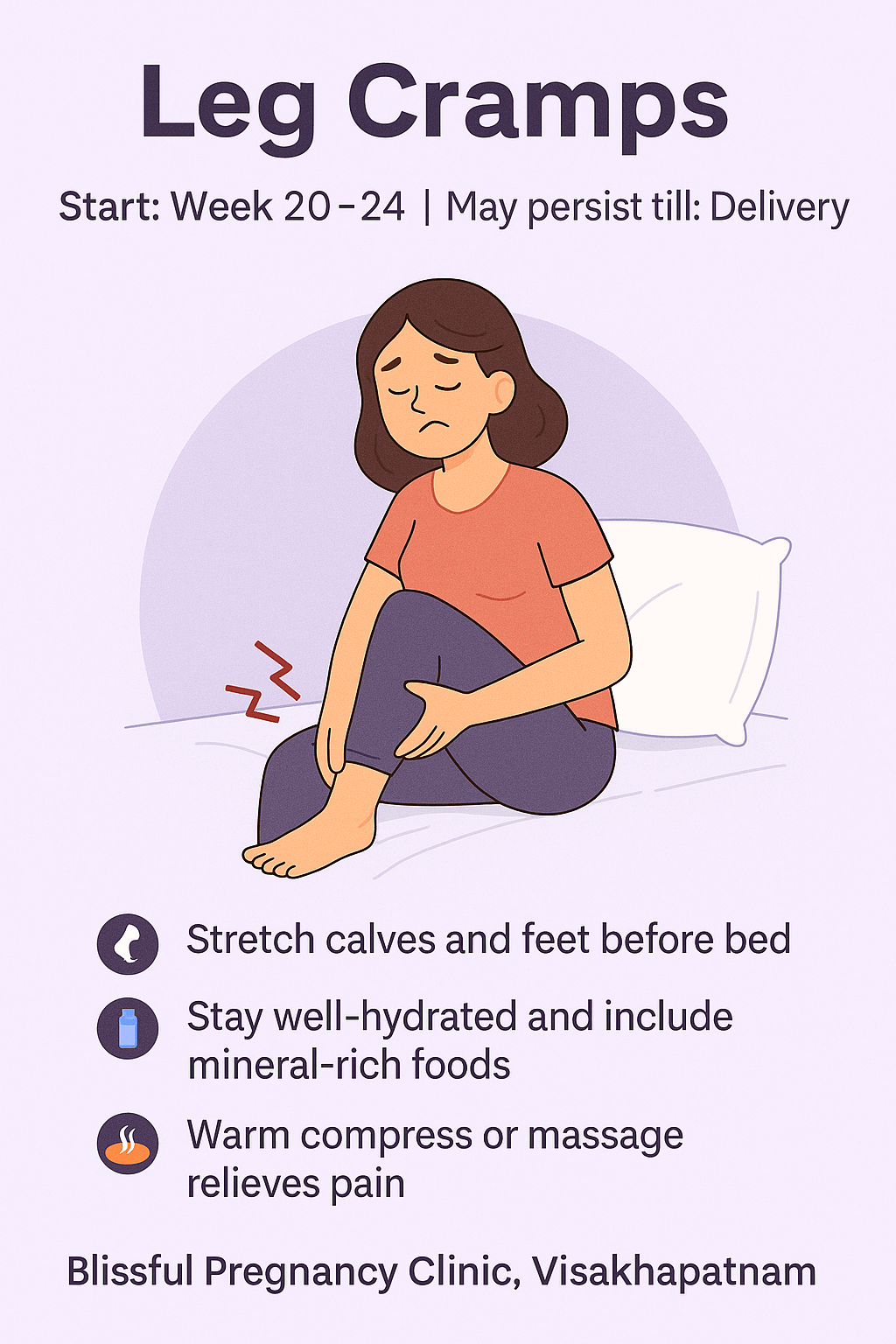
Leg Cramps
Sharp, sudden muscle spasms—usually in the calves—can occur, especially at night. These painful cramps may wake you from sleep and tend to increase as pregnancy progresses.
Why it happens:
Pressure from the growing uterus on leg nerves and blood vessels
Mineral imbalances (calcium, magnesium, potassium)
Fatigue and reduced circulation in lower limbs
What you can do:
Stretch calves and feet before bed
Stay well-hydrated and include mineral-rich foods
Wear comfortable shoes and avoid standing too long
Massage or warm compresses can relieve pain quickly
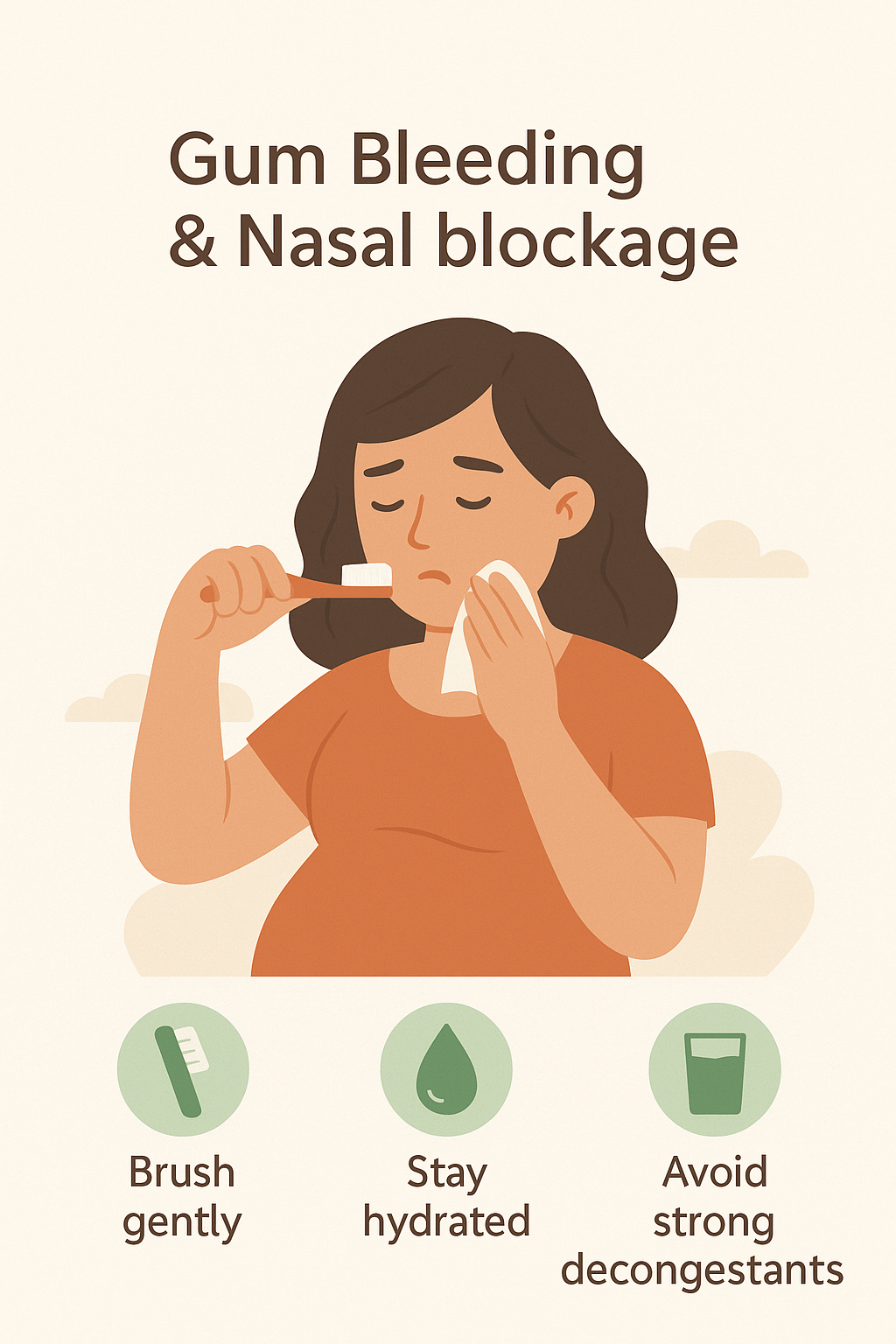
Bleeding Gums or Nasal Congestion
Many pregnant women experience gum sensitivity, bleeding while brushing, or a stuffy nose without a cold. These changes are due to increased blood flow and hormonal shifts, and they’re completely normal.
Why it happens:
Oestrogen and progesterone increase blood flow to gums and nasal passages
Swollen mucous membranes cause congestion and mild nosebleeds
Heightened inflammatory response makes gums more sensitive to plaque
What you can do:
Brush gently with a soft-bristle toothbrush
Floss daily and visit a dentist for preventive cleaning
Use a humidifier or saline nasal spray for stuffiness
Stay hydrated and avoid strong nasal decongestants